
Tuesday, November 8, 2016

TAN AND FOODS, DISPEL SOME MYTHS

Image result for tan
We start our journey towards a healthy tan without the risks, talking about foods and false myths.
To achieve a golden tan and healthy first step to follow, even before following proper nutrition is the constant use of suitable cosmetic products, only real weapon against ultraviolet rays, but before each exposure must prepare the body so that it can produce all the useful substances in countering the damage from exposure.
The foods can better prepare ourselves to the production of melanin (substance stimulated during exposure to the sun, which gives the dark color to our skin), and to limit the damage caused by free radicals, which in these cases are produced in excess. It is because, at every unprotected exposure to UV rays (the rays emanating from the sun and responsible tanning), it triggers an inflammatory process which leads to an increase in the concentration of free radicals in the exposed area.
The first rule is do not overeat carrots with the belief that they can improve our tan; carrots make a particular nutrient called beta carotene, a substance which, if taken in excess, can of orange color our skin, but in this case we will speak of carotene accumulation and not of tanning.
But then why it is recommended a greater consumption of carrots?
Beta carotene, when ingested in excess, is assimilated and deposited at the level of the hypodermis (the deepest level of our skin) where are our fat cells (fat). Here it accumulates acting as a "storage area", able to supply the dermis (ie the upper layer hypodermis, where are all of our skin's support structures), of this precious substance capable of counteracting the damaging action of free radicals, thus protecting our skin from a premature aging to block the activity of free radicals in excess. So it is good to ingest this food every day especially in summer, perhaps in the form of centrifuged, fast and easy to carry (see recipe).
Note of sunlight:
The solar rays are responsible for tanning classified in UVA, UVB and UVC.
UVA: they are able to penetrate deep into the dermis damaging capillaries, collagen and elastin, causing rashes, but without producing persistent tan
UVB: have a lower penetration capability, but they are just as harmful, as they damage the genetic structures of our skin cells
UVC: are especially harmful for our skin, but most of them are held by the ozone layer, they do not stimulate the tanning and cause erythemas
But back to foods, the second rule to follow is to drink plenty of water (between meals) up to 2 liters a day, and if the case integrate mineral supplements. For food, it is recommended to prefer fruits and vegetables deep red, yellow or orange, but especially ripe tomatoes (and possibly well-cooked tomato sauce) for their content of polyphenols (antioxidants), mineral salts, but in particular lycopene, an antioxidant molecule with anti-cancer properties known now.
A recipe that can combine all of these properties, it is the "centrifuged summer"
Ingredients
  • 250 gr. from leaf spinach
  • 500 gr. peeled carrots
  • 250 gr. celery
  • 1 lemon
  • 1 apple

Preparation
The lemons must be private of external white, that stands between the segments and the true skin in order to avoid a bitter aftertaste.
Extract the juice in this sequence:
  1. spinach
  2. Lemon
  3. Celery
  4. carrots
  5. Apple

Stir the liquid obtained in order to mix well the spinach juice and add ice to get a refreshing drink

Enjoy your meal!
Andrea Busalacchi

Thursday, October 13, 2016

CHAMOMILE TO REDUCE THE RISK OF THYROID CANCER


Chamomile, is one of the best known plants in the world, thanks to its infusion, many have been able to get the benefit of its calming and mild sedative. The part used is the peep, or inflorescence that is harvested when its petals are dried.

From here, through an infusion extracting a set of active substances, which in addition to exert a calming effect, possess an important anti-inflammatory action; just think to bisabolol, chamazulene and farnesene, substances that are found in the essential oil, and that for the same amount, can exert anti-inflammatory action comparable to cortisol.

But the latest research have concentrated to an interesting preventive activity against certain types of thyroid cancer in addition to the well-known properties of this plant, a cancer that accounts for about 1-2% of all tumors. This property has emerged from an observational study, where there was evidence that those taking 2 to 6 times a cup of chamomile tea a week, had about 70% less likely to develop this form of cancer.
This certainly does not surprise us, because the practice of drinking a good cup of chamomile is part of the habits of a good and healthy Mediterranean diet; further evidence of how some eating behaviors of our diet, work synergistically in the prevention and maintenance of a perfect state of health of our body.

But if we do not like to drink a good infusion of chamomile, we can always swallow it with an interesting and tasty recipe "risotto with chamomile"

Ingredients

  • Carnaroli rice
  • Extra virgin olive oil 
  • Infused Chamomile
  • Parmigiano Reggiano (including the peel)
  • Salt 
  • Pepper
  • Xanthan gum

Preparation

Toast the rice in a pan with extra virgin olive oil. Deglaze with the infusion of chamomile.
When cooked, stir in a pinch of Parmesan cheese and freshly ground pepper.
Put the rind of Parmesan, after cleaning the outside, in the microwave at full power for 50 seconds.
Cut it into cubes.
Serve the risotto with diced parmesan and a chamomile gel obtained gelling infused with a hint of xanthan gum.

Enjoy your meal!


Andrea Busalacchi
Tuesday, July 19, 2016

RESVERATROL FOR THE MUSCLES, "BUT SHOULD NOT BE TAKEN ONLY WITH THE WINE"


Resveratrol is well known, and how it is able to improve our quality of life if taken regularly is known, but probably do not know enough.

An interesting impact on health largely unexplored until now, is the ability that would own this molecule in improving our aerobic sports performance, but this aspect, certainly interesting might be somewhat deductible. Very little predictable is instead the regenerative aspect that resveratrol is able to show in those conditions in which the physical initial state is compromised.
This condition can occur for example as a result of a prolonged period to a diet rich in fats and sugars, because our muscles and in particular the myosin (a protein responsible for muscle contraction) tends to alter its behavior, making the muscles less resistant to prolonged efforts (aerobic activity) and more suitable for a short-term effort.

In these circumstances resveratrol, from studies performed in the laboratory, it would be able to restore the initial conditions of the muscle, once again giving it the resistance to prolonged effort; this recovery activity was resolutive following a diet rich in fat and sugar duration for 2 years. Consequently to this diet, certainly not healthy, the integration of resveratrol, showed an improvement of muscle condition, bringing the muscle in the initial conditions (before diet for 2 years)
This is quite new and interesting, because it allows you to set the stage for even more in-depth studies on the physical recovery, with important implications for the recovery of muscle ability in the elderly.
But attention, the amount of resveratrol taken daily can not be introduced solely through the wine (especially red wine) but needs a further supplementation through food supplements, but if you want to taste a good recipe, definitely rich in this wonderful substance and accompany a good glass of wine, we just have to try a good risotto with Barolo:

Ingredients

½ kilo of rice
1 onion
½ liter of vegetable stock
3 glasses of Barolo wine
a pound of grated Parmesan cheese
50 g butter
extra virgin olive oil
2-3 bay leaves
2 sage leaves
Salt and Pepper To Taste

Preparation:
Slice the onion very thin and make them fry over low heat in a large saucepan with oil, a knob of butter and bay leaves
When the onions are well softened, add the sage leaves and a glass of Barolo, raise the heat, toss the rice and stir well until "attacks"
Add to that point the remaining two glasses of Barolo and let them absorb, again on high heat and pour over rice, one by one, the ladles of broth, bringing the risotto cook
Finally stir in the remaining butter, adding the Parmesan
Leave to rest for a moment, and, before serving, add a generous grinding of black pepper

Enjoy your meal!

Andrea Busalacchi

Wednesday, June 8, 2016

TREAT THE MEMORY AND PREVENT ALZHEIMER'S DISEASE: A REMEDY FROM GREEN LEAFY VEGETABLES


The biggest fear you have when you get older, it is the fear of losing the memory; a result more and more often frequent aging.

The increases in life expectancy, has led the body to have to fight and to better control the degenerative processes, which will inevitably become more and more pressing as we age. Memory loss is the basis of many diseases to which Alzheimer's.

To aging, lifestyle and nutrition are the only weapons at our full availability, the only ones able to interact with our genetic heritage and dialogue with him constantly. Yes, because "what we do is more important than what we are", in a nutshell epigenetics or the interactions of external factors on the coding and regulation of our DNA.

In this regard feed periodically green leafy vegetables, seems to be a great way to "communicate" to our DNA a positive message for the control of memory and why not, of thought. Ingesting 2 or more daily servings of vegetables in green leaves, it would lead to a mental rejuvenation process that can reach up to 11 years! This thanks to the presence of numerous substances make with this food, such as lutein, folic acid, vitamin K, beta-carotene, vitamin C and numerous polyphenols. In addition to the nutrients ability of many of these elements, many of them are critical in the control of radical-inflammatory stress, process underlying degenerative processes; lutein and beta carotene in particular, have the peculiar property of protecting our cells by interacting directly with the plasma membrane (the lining of the cells), entering inside and avoiding being damaged by free radicals (a diaphragm failure would result in the early death of the cell).

Daily introduce green leafy vegetables is a good strategy, but the advice is to do so with raw foods (salads) but also with cooked foods, as quick cooking on the one hand causes a small loss of heat-sensitive nutrients, but from 'another allows a better assimilation by the body.
As usual a recipe for putting into practice these tips, in a nice and tasty, "green frittata":

INGREDIENTS:

1 large sprig of mint,
2 stalks of celery,
3 coasts of chard with leaves,
3 leaves of lettuce,
1 bunch of arugula,
1 bunch of nettles,
4 sprigs of savory,
some fresh oregano leaf
2 white onions,
80 grams of Parmesan cheese,
6 eggs
extra virgin olive oil
salt

METHOD:
After washing them thoroughly, coarsely chopped all vegetables and herbs, peel the onions and cut into pieces also, put these vegetables in a container together with the eggs, Parmesan cheese and a pinch of salt, finely chopped with a blender immersion for 2 '. Heat an abundant oil in a frying pan, pour the mixture, stir initially with a scoop (for better cooking), then reduce the heat, cover with lid and simmer for 6/7 ', then turn it on a plate lid and put it back in the pan on the other side, cook for 3/4 'and turn off the heat.
Enjoy your meal!

Andrea Busalacchi

Saturday, March 12, 2016

THE MOST POWERFUL ANTIOXIDANT IN THE WORLD, IS SICILIAN


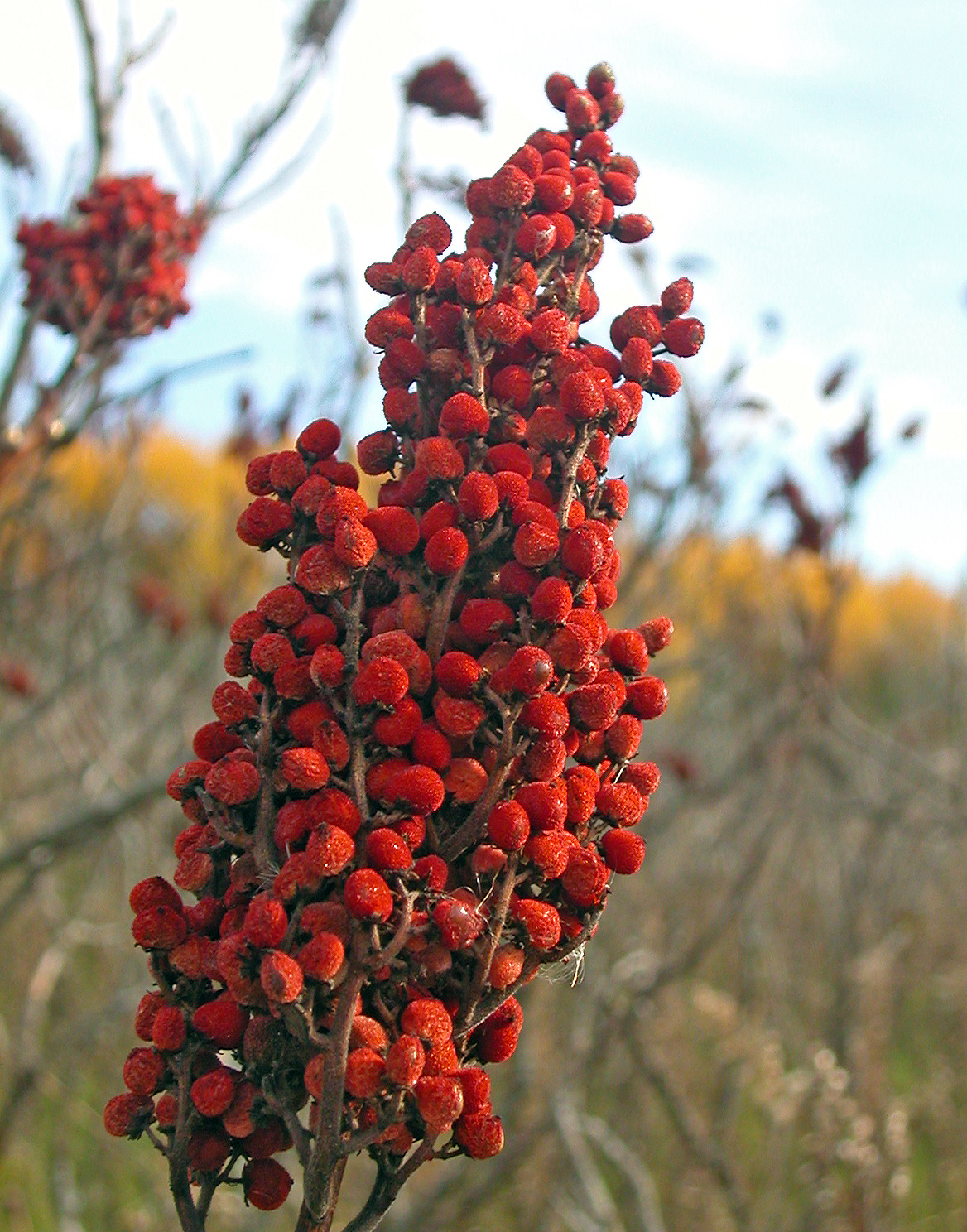
How many times in our campaigns we came across a weed and often annoying, that in all the ways we have tried to weed or prune to control it? A plant with leaves hairy and soft to the touch and flowers in the shape of "cob" intense red-brown color.
It was once used for the creation of a natural dye, but its food use is the one that should arouse our interest
In a historic moment, in which power is playing an increasingly important role for our health, (it is assumed that about 50% of our health depends from our eating habits) sumac outperforms any other food in the fight against radicals free.
Yes, among the most powerful antioxidants in the world (if not, the most powerful) today known, we just her, the weed that occupies part of our countryside! And there's more, one of the richest variety in beneficial substances is precisely the Sicilian one, or the Rhus coriaria L., the Sicilian sumac. In the ORAC scale prepared by the USDA (National Nutrient Database for Standard Reference), our Sicilian plant dominate the top, with as many as 312,400 mol TE / 100g total units; his contribution in tannins (hydrolysable and condensed), phenolic acids, anthocyanins, gallic acid derivatives, flavonoid glycosides, organic acids give this variety of plants pharmacological properties, such as:
- Antibacterial activity
In particular, the one directed towards Helicobacter Pylori (responsible for various diseases, including gastritis, peptic ulcer, dyspepsia and gastric cancer)
one facing the Propionibacterium acnes, one of the factors responsible for acne
or that towards the Salmonella
- Antioxidant activity
Thanks to his leadership, provides the body a quantity of antioxidants high, just 2 grams per day for far exceed the amount of ORAC units recommended (ie 5000)
- Glucose lowering activity
Its direct action toward certain enzymes responsible for carbohydrate digestion, slows the absorption process, thus lowering the glycemic load of the meal
- Protective DNA Activity
The gallic acid and ellagic acid protects our genetic heritage from the attack die free radicals
- Cholesterol-lowering and lipid-lowering activity
Sumac slows the oxidation of bad cholesterol and at the same time the same lowers total cholesterol levels
- Ateroprotective Activities
The tannins made from this plant, act by decreasing vascular inflammation, responsible for the atherosclerotic disease
But how can we use this valuable plant?
A simple recipe for tabbouleh to fragrances of Sicily and allows us to bring out the best flavor of this unique spice

Ingredients
125 g of parsley in small leaves
60 g of broken grain (ancient Sicilian durum wheat) or buckwheat / quinoa (for gluten intolerant)
25 g of fresh mint
150-200g of cherry tomatoes
1/2 onion from Giarratana
1 interdonato lemon from Messina
Olive oil extra-virgin olive oil
Sumac (sumac)
Lettuce
sea ​​salt from Trapani

Preparation
Wash the herbs and drain, prepared bunches with the leaves and cut by hand with a sharp knife (do not use a mixer for this operation).
Squeeze the two lemons.
Cleaning under running water the grain in order to eliminate any residues and allow to soak for it soften (about 10 minutes), drain it thoroughly and squeeze excess water, place in a bowl with the lemon juice and olive oil olive.
Let it stand for about 1/2 so that it absorbs the sauce and showing tender, but not soaked.
Slice the onion very finely and mix with salt and sumac powder.
Just before serving add the corn to the chopped herbs, a little at a time.
Add the onion and finish seasoning, stirring well.
The sour taste of lemon should be clean.
Serve the salad on a large platter garnished capacity with lighter leaves and crispy taken to the heart of the lettuce. Complete with diced tomatoes.

Enjoy your meal!

Andrea Busalacchi

Thursday, January 28, 2016

MIRACULOUS SPICES (AND FLOWERS) FOR YOUR HEALTH. HERE IS OUR INDISPENSABLE MIX


The well-being of our body, as we all know by now, is the combination of a good physical activity accompanied by a varied and balanced in which the elements are selected ad hoc based on our real needs.

Some foods are definitely needed and promote our health preserving us from chronic diseases such as diabetes and obesity, these are mainly spices of various kinds that are almost like drugs, remedies "miracle" for eating disorders and health of different origin and extent. It would therefore be good practice to create a small reserve of spices to be used continuously, which will contribute to flavor and make our creative cuisine and simultaneously to improve the welfare of our body.

There is a vast literature on spices and their various antioxidant powers, the most prodigious we can include cloves, allspice, mint and cinnamon, and for this reason some spices should always be present in our kitchen as d 'Besides, my.

Here are some mix in my opinion prodigious: Mix sweets, the Italian Mix and Oriental Mix, individually examine their composition and their respective benefits. We start from the Mix sweet, contains cinnamon, cloves, allspice and nutmeg, can be mixed in various dishes or drinks, it is a tasty blend of sugar and devoid of extraordinary antioxidant, works as a sort of "rust" fighting stress oxidative accorded to our arteries over time, especially the cinnamon would help to balance the levels of blood sugar and to counter the bad cholesterol, blood pressure would lower the allspice and nutmeg might be useful to lower levels cholesterol, treat depression, improve memory and why not fight wrinkles.

Turning to mix Italian, it is a mixture of green herbs, oregano, marjoram, thyme, basil, rosemary and sage each with its own specific characteristics. The oregano contains carvacrol and thymol the antibacterial and antiviral properties, can then calm the stomach, prevent food poisoning, improve the health of the liver. Marjoram has the same two active components of oregano to which is added a third, ursolic acid, all three components work synergistically and help to delay the progression of diseases such as Alzheimer's disease, to thin the blood thus preventing possible attacks heart, would also enhance the digestive process. As regards the thymus, it would be the various anti-inflammatory properties while the basil would act as an "adaptogen" making it easier to cope with stress. Finally what about rosemary and thyme? The first known since the days of Shakespeare improve memory and counter the production of substances that favor aging and the onset of cancer, the second would limit the formation of arterial plaques.

Last but not least the eastern Mix, it contains coriander, cumin, turmeric, pepper, ginger, cardamom, mustard, cloves, nutmeg, black pepper and saffron. Turmeric is the yellow spice well known Indian spices for centuries considered a healer for its antioxidant and anti-inflammatory properties due to the presence of curcumin, however numerous are the research (and many articles published by us), conducted on animals but also humans, who tested and shown widely the health benefits from the consumption of turmeric and curcumin in dozens of medical diseases of various kinds, such as heart disease, high cholesterol, diabetes, Alzheimer's and cancer. Having said that we have to create our own personal "pharmacy" of spices in which they will certainly miss those so far examined, have fun with them to create highly original and tasty dishes that will delight our palates and will do good for our health.

Here are some tips on how to mix the spices and why not even the flowers:

Floral blend (mix the flowers in equal parts)

Flowers of thyme
Flowers calamint (mint)
Basil flowers (leaf lettuce)
Flowers of Monarda citriodora
Chive Flowers
Flowers of salvia coccinea
Flowers of Chinese garlic
Preparation
Do dry in a dry and ventilated, not exposed to sunlight or flowers lose all their color. Crumble hand inflorescences larger as those of Monarda or thyme, so that they can better dry. Mixture of aromatic flowers when the harvest season ends, chop the mixture of flowers with a blender.

Spicy mix (spreadable)

2 teaspoons of thyme powder
1 teaspoon dried parsley leaves
1 teaspoon ground cinnamon
1 tablespoon ground black pepper
½ fresh chilli
1 teaspoon paprika
1 teaspoon ground cumin
2 tablespoons salt
1 teaspoon ground nutmeg
2 teaspoons brown sugar
3 cloves garlic, crushed
1 chopped onion
Spicy mix (dry)

4 tablespoons salt
2 tablespoons cayenne pepper
2 tablespoons sweet paprika
1 tablespoon minced onion
2 tablespoons black pepper
2 tablespoons white pepper
1 tablespoon minced garlic
1 tsp oregano powder
a pinch of thyme powder
a pinch of mustard powder
a pinch of ground cloves
a pinch of ginger
Mix green

2 tablespoons thyme
2 tablespoons rosemary
2 tablespoons lavender
2 tablespoons marjoram
2 tablespoons oregano
2 tablespoons mint
2 tablespoons bay
2 tablespoons basil
Curry

8 tablespoons cumin
7 tablespoons coriander
2 tablespoons ginger
4 tablespoons turmeric
½ teaspoon pepper
½ teaspoon nutmeg
½ teaspoon cloves
Mix Chinese

2 tablespoons anise
2 tablespoons fennel seeds
2 tablespoons ground cinnamon
2 tablespoons cloves
2 tablespoons black peppercorns
Mix Pakistani (spices are toasted 4-5 minutes before pulverization)

2 tablespoons cumin seeds
2 tablespoons coriander seeds
2 tablespoons cardamom seeds
2 tablespoons black peppercorns
1 teaspoon cloves
½ teaspoon ground cinnamon
1 teaspoon grated nutmeg
1 tsp turmeric powder

Andrea Busalacchi